
Why Your SMS Open Rates Are Dropping, and What to Do About It
SMS still gets read, but you cannot see it directly. When SMS results fall, it is usually because fewer messages arrive, fewer recipients trust the sender, people weren’t expecting the message, or plain text isn’t enough to prompt a response. Here is how to tell which, and what to do about each.
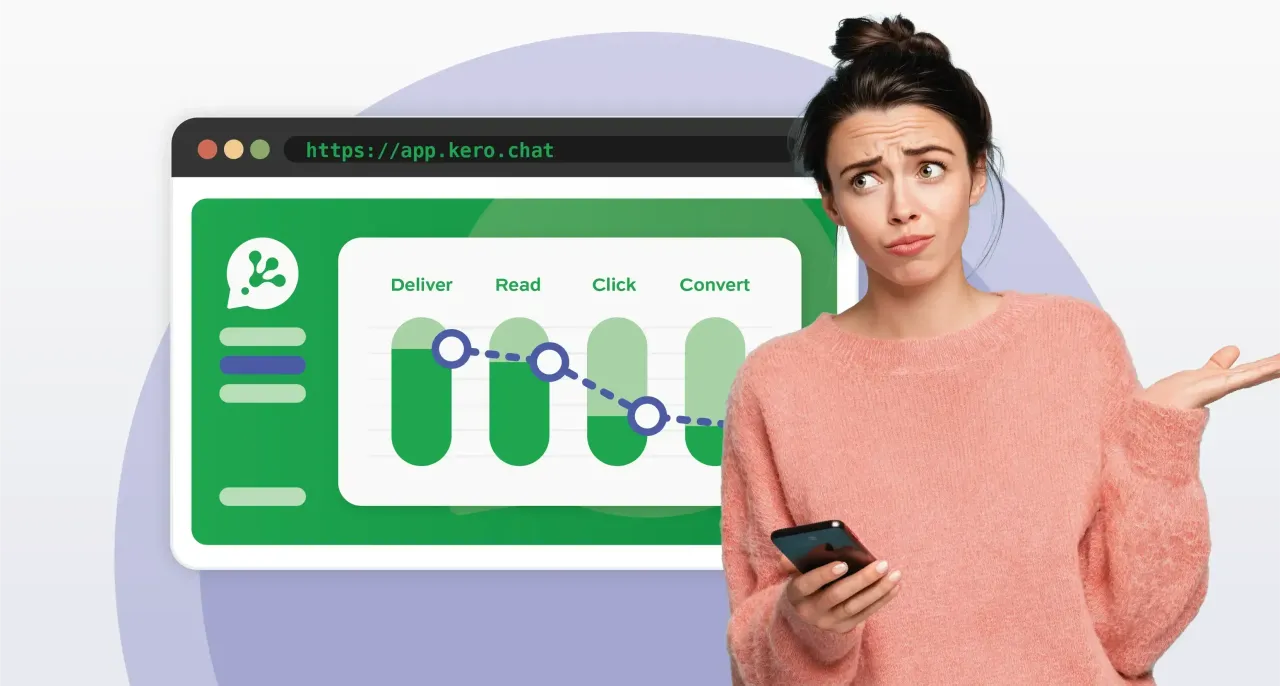
SMS cannot report opens, so what you are really watching is delivery and response. Fix those first, then move the messages that need more than plain text to RCS or WhatsApp, and keep SMS as the last step in the chain.
Can you measure SMS open rates?
Not directly. SMS has no read receipts, only a delivery status. Any SMS open rate you see is an estimate, usually worked out from link clicks or replies. When that number falls, look at three figures instead:
- Delivery rate: how many messages reached a handset.
- Response rate: how many recipients clicked or replied.
- Opt-outs: how many asked you to stop.
These are usually where a falling “open rate” really comes from, and each needs a different fix. Looking at only one can send you after the wrong problem, so read all three together before you change anything. The pattern across them tells you which of the four causes below you are dealing with.
Why are fewer of your SMS messages landing?
Stale numbers and filtering
Even a well-kept list loses contacts over time. People change numbers, opt out or join a do-not-disturb list, and carriers filter traffic that looks like spam. If delivery falls while response among delivered messages holds steady, this is the likely cause. A delivery report broken down by reason shows how much of your drop happens before anyone has a chance to read.
Your sender looks unfamiliar
A message from a random number or unknown sender ID is easy to ignore, and SMS phishing has made people wary of links from senders they don't recognise. Sender ID rules vary by country, and an unregistered sender can be filtered or rewritten on the way. If delivery and response fall together, the sender is the likely cause.
People did not expect the message
Too many messages, or messages that do not match what someone signed up for, train recipients to skip you. Rising opt-outs are the early sign.
Plain text has to do all the work
We now live in a visual, app-heavy messaging world, and a plain SMS has to compete with it. An SMS is 160 characters of text, with no images, no buttons and no brand logo, so the whole job falls on a sentence and a link. That is rarely enough to carry a promotion or a launch. Delivery and opt-outs stay healthy here, but response lags.
What can you do about it?
Match the fix to the figure that moved. Changing the message when the problem is the list wastes a send.
- If delivery is falling, clean the list. Read your delivery reports by reason, then remove invalid numbers and honour opt-outs. At Kero, we help clean out your numbers so your figures measure people who can actually receive you.
- If delivery and response are both falling, fix the sender. Register your sender ID where your countries require it, and use the same name every time. People respond to names they recognise.
- If opt-outs are rising, send less and send better. Segment your list and tie every message to something the recipient asked for. We also help segment contact lists so messages fit each audience, and you can see how smarter messaging improved customer engagement for one business.
- If response is lagging, change the format. Move rich messages to RCS or WhatsApp. Both show a verified brand name and profile, support images and buttons, and report read receipts, so you see real opens instead of estimates. Keep SMS underneath as the fallback: a message tries the richer channel first and steps down to SMS if it cannot deliver.
When is SMS still the right channel?
For one-time passwords, alerts and anything that must reach every phone. SMS needs no app and no internet connection, so the question is not whether to keep it, but which messages should start somewhere richer. Our comparison of SMS, RCS and WhatsApp explains what each channel does best.
So, what does a smarter SMS strategy look like?
SMS on its own can no longer carry the whole job. Delivery is harder to guarantee, recipients are more selective about who they trust, and plain text struggles to compete with richer messaging. The businesses that keep their reach treat SMS as one layer of a strategy rather than the whole of it: richer channels first, where they work, and SMS underneath so every message still has somewhere to land.
To see how a message steps down from RCS or WhatsApp to SMS, read how smart fallback works, or start a 5-day free trial.
Frequently asked questions
Why are my SMS open rates dropping?
Usually because fewer messages are delivered, the sender is not recognised or trusted, or recipients receive messages they did not expect. Check your delivery rate, response rate and opt-outs to see which one it is.
How do I measure SMS open rates?
You cannot measure them directly, because SMS has no read receipts. Track delivery rate and clicks or replies over time instead. RCS and WhatsApp do report reads.
Is RCS replacing SMS?
RCS adds what SMS lacks, such as branding, images, buttons and read receipts, on phones that support it, including Android phones with Google Messages and iPhones on iOS 18 or later. SMS still reaches every phone, so most businesses use both, with SMS as the fallback. See how to send RCS messages instead of SMS.
How do I know which channel delivered my message?
In Kero, every attempt is its own row under Messages, Sent Messages, with the channel, the status and the reason.
Phumlisa Zibaya