
What Happens When a Messaging Channel Goes Down
When a messaging channel cannot deliver, a single-channel send simply ends in failure. With fallback, the message moves to the next channel you chose, such as RCS, then WhatsApp, then SMS, and every attempt is reported. Here is how channels fail, what fallback does about it, and what it cannot fix.
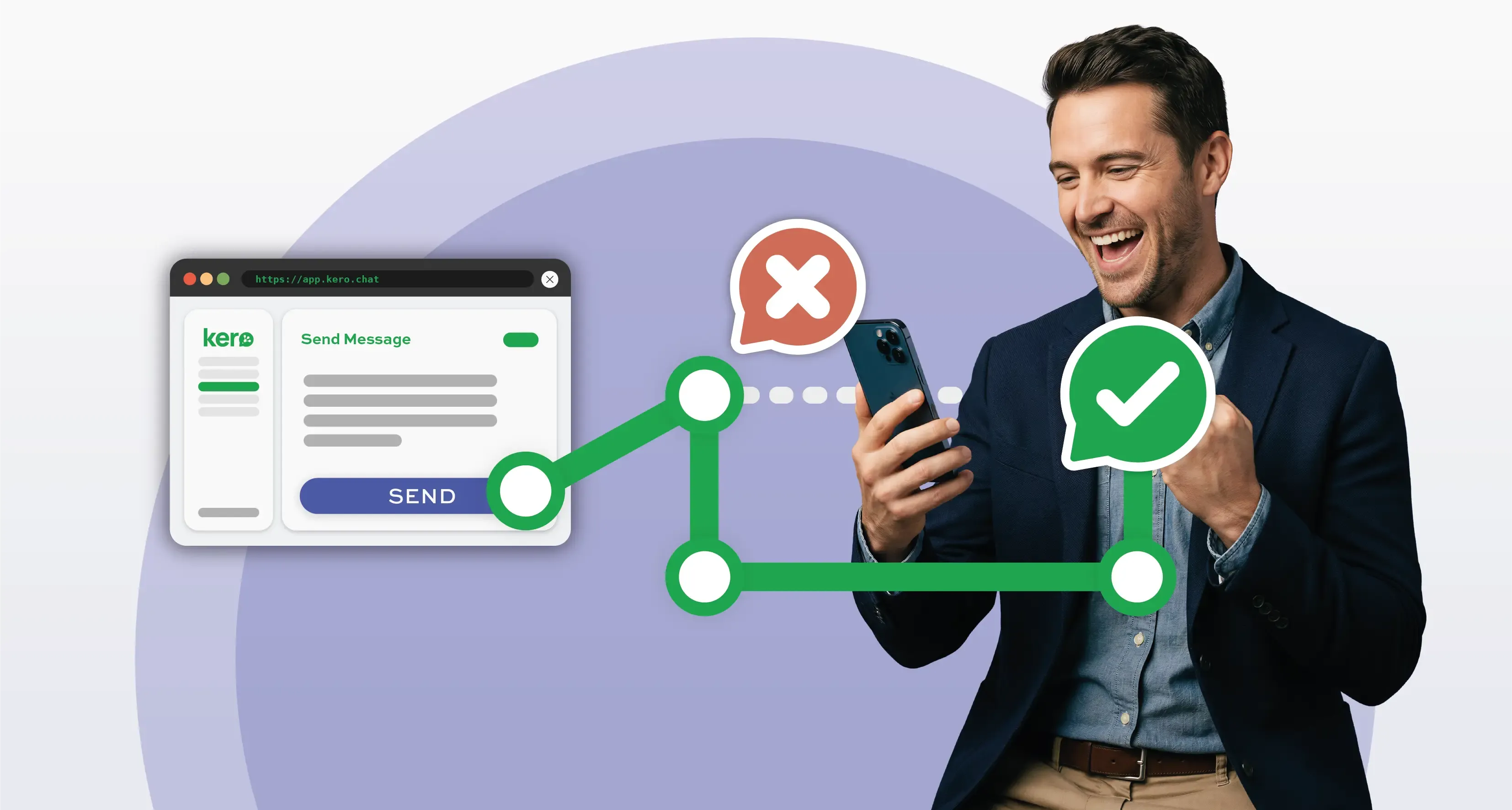
Without fallback, a message sent on one channel simply fails, and often nobody notices until a customer says it never arrived. With Kero, if your first-choice channel cannot deliver, we automatically try the next channel you have set as a fallback, so your message gets every chance to reach its recipient.
How does a messaging channel fail?
A channel rarely fails in a way that makes the news. Most failures are small and happen one recipient at a time:
- The recipient's phone does not support RCS, or the number is not RCS-enabled.
- The recipient does not have WhatsApp installed.
- The handset is switched off or out of coverage.
- A network or provider problem delays or drops the message.
- The message is still undelivered when it expires.
What does a full outage look like?
A full outage is the same problem at scale. Instead of one recipient at a time, a whole channel stops for everyone, and every message on that channel stalls at once. Without fallback, that means an entire send going nowhere, with no one on your side alerted. With fallback, each message moves on to the next channel in your chain, either straight away on a hard failure or when it expires.
What does a failed message cost you?
A one-time password that never arrives means a customer who cannot log in. A delivery update that never arrives means a call to your support team. The failure does show as “failed” on your dashboard, but nothing happens next unless someone on your side spots it, finds the affected recipients and sends it again on another channel.
What happens with fallback in Kero?
- You set the order in your template. In Kero, a template is where you build a message and its settings. In the template’s Fallback section, add the channels in the order they should be tried, such as RCS, then WhatsApp, then SMS.
- Kero tries the first channel. Each attempt is limited by the template's Expire setting, which you choose.
- A failed attempt moves on. A hard failure, such as "Number is RCS disabled", moves to the next channel straight away. A message that is not delivered before it expires moves on when it expires.
- Kero sends on the next channel. It follows the exact order you set, with no action from your team.
- Every attempt is reported. Each attempt is its own row under Messages, Sent Messages, with its status and the reason, so you can see which channel delivered and why the others did not.
The same steps run whether one phone cannot take RCS or a whole channel is down.
Which fallback chain should you use?
Kero supports any chain you build in the template. Four are common:
- RCS, then SMS: rich messages on phones that support RCS, plain text for everyone else.
- RCS, then WhatsApp, then SMS: the widest reach for rich content, with SMS as the final step.
- WhatsApp, then RCS, then SMS: for audiences that mostly use WhatsApp.
- WhatsApp, then SMS: a short chain for WhatsApp-first audiences.
For time-critical messages such as one-time passwords, keep the expiry short and end the chain in SMS. Our post When one channel fails, Kero doesn't explains when to pick each chain.
What fallback cannot fix
Fallback gives every message several chances to arrive and tells you what happened to each one. It cannot deliver to a number that is invalid or unreachable, to a handset that stays off or out of coverage past the message’s expiry, to a recipient who has opted out, or through a carrier that blocks the traffic. It also cannot send content a channel rejects on policy grounds, such as a WhatsApp message sent outside the 24-hour window without a pre-approved message format. “Delivered” means handed to the network or the handset, which is not the same as read.
A checklist before your next outage:
- End every chain in SMS. It can reach any mobile phone, with no app and no internet connection needed.
- Set an expiry that fits the message. A one-time password needs a short one. A newsletter can wait longer.
- Write each message so it still works as plain text. Preview how it looks on each channel, because SMS carries text only.
- Check Sent Messages after a large send. Rows marked fallback_sent show where a channel failed and what took over.
- Keep your contact data clean. Fallback cannot reach a number that no longer exists.
Frequently asked questions
What is SMS fallback?
SMS fallback is the automatic resending of a business message by SMS when a richer channel, such as RCS or WhatsApp, cannot deliver it. Kero calls this smart fallback, and it works across all three of its channels, not only SMS.
How long does Kero wait before trying the next channel?
It depends on the Expire setting in your template, which you choose for each message. If you set it to one minute, Kero waits up to a minute for the first channel to deliver, then moves to the next one. A hard failure doesn’t wait at all: if a number isn’t RCS-enabled, for example, Kero moves to the next channel straight away.
Does fallback help if WhatsApp has an outage?
Yes, as long as WhatsApp is not the last channel in your chain. Messages WhatsApp cannot deliver before they expire move to the next channel you have set.
Can a recipient choose which channel they receive?
No. The sender sets the chain in the template, and Kero applies it at send time.
See every step of a fallback chain on how smart fallback works, or start a 5-day free trial and build your first chain.
The Kero Team